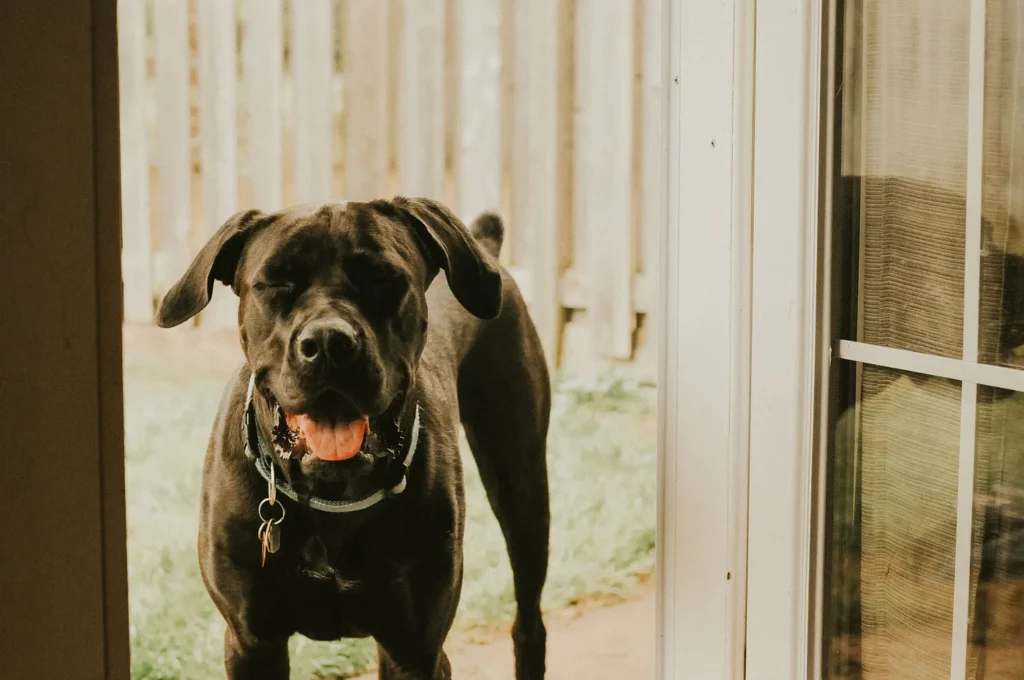
Photo credit Peglees Barrios
I.
Puerto Escondido, Oaxaca. Mexico
I don’t see the pit bull until his jaws are on the back of my leg about six inches below my ass. A big-headed street dog, maybe 100 pounds, ready to tear me to shreds. But he doesn’t dig in — instead he squeezes just hard enough so that I know he’s there — then he lets go, backs up, stares me down, and growls demonically.
As I back-peddle, terrified of what could follow, he holds his ground — a well-fed pit that must have been sleeping in the shadows of the night. His head is the size of a cinderblock, his teeth like razors, and his jaw, I know, locks when it clamps shut.
I bend down, simulating the act of grabbing a rock (a trick I’ve learned from my travels), but there is no rock to grab and he doesn’t move an inch. I watch his merciless eyes as I back away slowly. Fortunately, he doesn’t attack again and I’m able to scoot into a nearby hotel.
“Is that your dog?” I say to the man working. “He just bit me in the ass!”
I pull up my shorts to reveal nothing more than a small perforation, a little red dot without even a drop of blood. I feel slightly embarrassed by my lack of evidence, and it is only days later when a bruise shaped like a jaw shows up on my leg that I can prove the incident was real.
II.
Guadalajara, Mexico (3 days later)
I pay for a taxi at the airport to take me to the bus station where I’ll catch a ride to Zacatecas for my wife’s grandmother’s funeral. The taxi is a friendly, middle-aged fellow , and immediately he begins to talk.
He asks me if he can stop on the way to the station to pick up his wife. This is unusual, but not so much in Mexico, where improvisation and informality are part of everyday life. “Sure,” I say. “Why not.” It doesn’t happen because it turns out his wife is with his three kids, and there’s not enough room — although it seems like he wants me to say, “Sure, why not. Pile in.” But I don’t. I have my limits. “Pick ’em up on the way back,” I say. This seems reasonable.
During the ride, his glasses dangle from his face as he talks on the phone and with one hand on the wheel, aggressively weaves in and out of lanes at seventy miles per hour. Then suddenly, he tries to skirt into a lane while another car is moving into the same lane. The cars come within inches of colliding, but my taxi, rather than pull back and slowing down, continues driving within a foot of the other car, leaning over the passenger seat to scream at the other driver through the window.
“Take the lane!” He shouts in Spanish. The other man yells back, “Chinga tu madre, cabrón!” Both drivers getting progressively angrier as they continue driving alongside each other.
“Tranquila carnal.” I say. “I’m in no hurry. I want to get to the bus station alive. I want to see my wife again. This is how people die in my country.”
Then the guy in the other car reaches down and grabs a baseball bat from under his seat and waves it out of the window menacingly. The situation is escalating.
I plead, “Calm down, bro. No tengo prisa. Vamos al estación. Let it go.” But my driver is irate, yelling obscenities through the window, trying to make some kind of point — whatever it may be.
Luckily, the other driver gets off at an exit, still waving the baseball bat from the window, and I make it to the bus station safely.
III.
Zacatecas, Mexico (a week later)
I wake up in the morning after the first Rosario where family and friends had gathered to pray for my wife’s grandmother only to discover that last night, about five blocks from where I’m staying in Guadalupe, a truck pulled up to a popular wall ball court and a gunmen sprayed 50 bullets into a crowd of players and spectators. Six were killed immediately, and at least two more died from their wounds a few days later.
As the cartels continue to battle for control over shipping routes to the U.S., the beautiful colonial city of Zacatecas where my wife grew up has been turned upside down. City walls are covered with faces of missing persons (los desaparecidos). “We miss you,” “We love you,” they say, like prayers to ghosts. Everyone knows the missing likely won’t be found, at least not alive. In this part of the world, the police commit more crimes than they solve. In Zacatecas specifically, 96% of crimes go unreported or unsolved.
Each time I visit this city, there is a new vigil in the neighborhood, a flickering candle illuminating The Virgin of Guadalupe and the pictures of young men, often just boys, the most recent victims of what appears to be a never ending turf war. While President Amlo cracks jokes in his daily morning press conference, the ‘Sol of Zacatecas’ newspaper reports one murder after another. Beheadings, mass graves, torture, and kidnappings are not uncommon. My nephews — smart, generous, responsible young people — don’t go out to bars or clubs like their peers in the States or other parts of the world. Their parents must worry, but if so, they never let on.