a strange encounter with a mysterious man in Mexico City
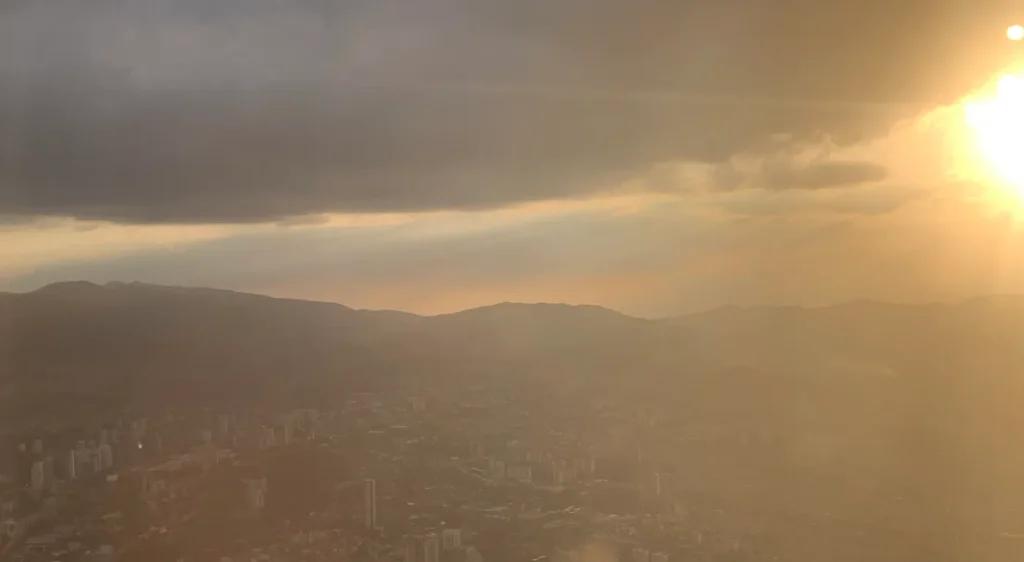
For all the hardness of Mexico City, the mornings come on soft. The few birds there are in my neighborhood chirp, and the sun spreads a creamy orange sorbet over my concrete jungle patiently.
Before the honks, horns, and sirens. Before anyone has had time to shout “Chinga tu madre, cabron!” Even before the gas man is belting in his baritone voice “Gaaaaaaaaasssss” into the colonial buildings of El Centro erected on the bones of Tenochtitlán, there is a certain softness in the air — a brief moment when footsteps and whispers can be heard. Sometime between night and morning in the Historic Center of Mexico City, there is a space for poetry.
That’s what time it was when I was walking to the local boxing gym, down Regina Street — a pedestrian street that further accentuates the city’s silent possibilities — when I saw the silhouette of man in the distance in the plaza beside the church cast a net into the sun and pull back fiercely.
The man was too far in the distance to see the details, so I quickened my pace, curious what mysterious stranger was awake to disrupt the harmonious morning with such a violent movement, my backpack stuffed with my gloves bouncing on my back as I began to jog.
As I got closer, he tied up his net forcefully and efficiently, and as he skirted away, I saw three pigeons trapped and flapping their wings frantically, their morning collecting crumbs in the plaza turned into a moment of unthinkable horror — and then the man was gone.
Since that day, I have often thought about the man “fishing” pigeons in the plaza under the morning light — What was his purpose? — What would become of the pigeons? — and along the way I have found some clues.
Once in Narvarte, a quiet residential neighborhood to the south of the Historic Center, I saw a store that sold pigeons, dozens of them in cages on the sidewalk living out a sad existence. I did not go into the store and ask what the pigeons were for, or where they came from, because there was something dark and sinister about the place that suggested I stay away.
Another time in Zacatecas, my wife’s cousin told me pigeons can be trained to fly in formation — their “pigeon-ness” disappearing to form celestial masterpieces before loyally circling back to their owners.
But the best explanation I have found, I think, is that the city is wholly inexplicable, like the night sky, and just when I thought I was getting comfortable, a man with a fishing net emerged from the sun and cast it into my face.
I saw the man with my own two eyes, I swear by it, but he just as easily could have been an apparition; Carlos Fuentes’ Aura walking down from Donceles Street or Juan Rulfo’s Pedro Páramo on a trip from Comala into the heart of the city — a ghost conceived by one of Mexico’s greatest writers manifesting in a dark, surreal, magical, and twisted way to remind me, wisely, that I know nothing at all.